
Mohammad Ghazi Vakili
CV

Senior Staff Scientist · QC Ware

Mohammad Ghazi Vakili

AI agents for scientific discovery, with quantum algorithms where they help: drug discovery, industrial optimization and self-driving laboratories.

Citations
939
h-index
17
Publications
32

01About

Between AI agents, quantum computing and the real world.

Portrait of Mohammad Ghazi Vakili
Senior Staff Scientist · QC Ware Previously: Matter Lab, University of Toronto

I am a Senior Staff Scientist at QC Ware, working remotely since April 2026. Before that I was a Research Associate at the Matter Lab, University of Toronto, working with Professor Alán Aspuru-Guzik. My work focuses on AI for science, especially AI agents and machine learning for drug discovery and self-driving laboratories, alongside near-term quantum computing algorithms and quantum-inspired methods for real-world problems.

AI agents for scienceMachine learningQuantum machine learningQuantum-inspired optimizationQuantum computingDrug discoverySelf-driving labs

02Highlights

Selected work

Flagship result

Quantum-computing-enhanced algorithm unveils potential KRAS inhibitors

Nature Biotechnology · 2025First authorUniversity of Toronto × Insilico Medicine × St. Jude Children’s Research Hospital

A hybrid quantum–classical generative model for small-molecule design, aimed at KRAS, a protein long considered “undruggable” and a crucial target in cancer therapy. A quantum model trained on a 16-qubit IBM quantum computer was combined with classical generative methods to propose new molecules. Fifteen were synthesized and tested; two hold promise as inhibitors. The work shows that quantum computing can contribute to experimentally validated hits that compare favourably against classical models.
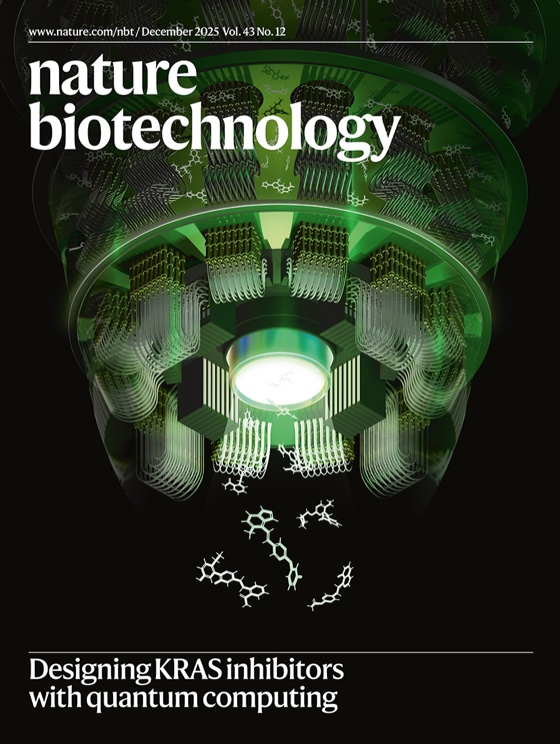

Cover of Nature Biotechnology, December 2025 (Volume 43, Issue 12): “Designing KRAS inhibitors with quantum computing”
On the coverNature Biotechnology, December 2025 (Vol. 43, Issue 12)Cover design: Erin Dewalt · © Springer Nature
A collaboration between
  • University of Toronto
  • Insilico Medicine
  • St. Jude Children’s Research Hospital
  1. Quantum–classical generative modelQuantum model trained on IBM hardware, combined with classical methods
  2. Design & selectNew KRAS-targeting molecules proposed and prioritised
  3. SynthesizeFifteen proposed molecules made in the laboratory
  4. Test against KRASExperimental assays: two molecules hold promise
15molecules synthesized and tested
2hold promise as KRAS inhibitors
16qubits on an IBM quantum computer (preprint)
146citations (Google Scholar)

In Nature Biotechnology: Cover story, December 2025 issue · Editors’ research picks: “2025: research in review”

In the news: U of T News · Temerty Faculty of Medicine · GEN

All research themes All publications

03Writing

Latest articles

Plain-language notes on AI agents, quantum computing and engineering.

All articles Agentic AI series

04Explore

Around the site

05News

Latest

    All news & coverage

    Interested in the work, or in collaborating?

    The best ways to reach me are below.